



Why are Gas Prices So High?
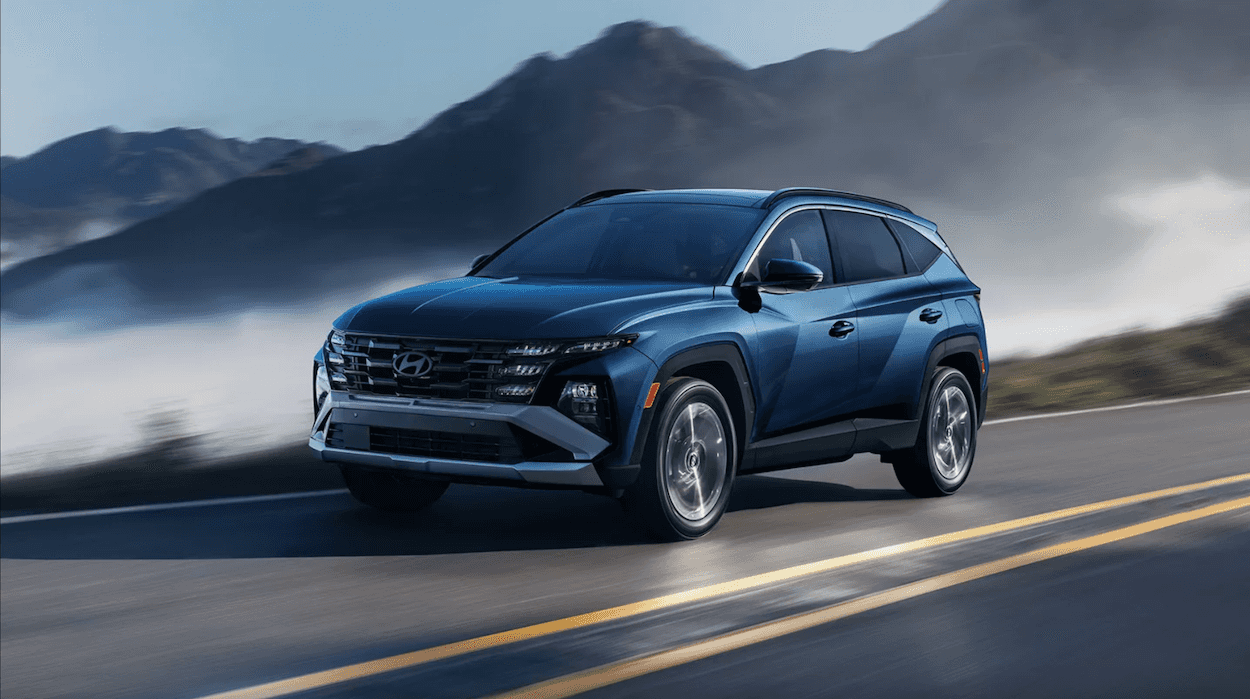
New Hyundai For Sale in Hanover
What is Causing Gas to Be Expensive?
The high price of gas in 2026 comes down to a variety of key factors:
- Global Supply: OPEC+ production has been reduced, affecting oil supply around the world since there’s less of it currently available. Demand stays the same though, which means the prices have gone up at the expense of drivers.
- State of Refineries: Infrastructure throughout U.S. refineries need upkeep and maintenance, which means any temporary shutdowns pauses the production of domestic gasoline as well.
- General State of the World: From global trade to ongoing conflicts, the current amount of uncertainty takes a toll on gas prices, as well.
- Seasonal Demand: Whether it’s people wrapping up their last few trips to round out the summer season or a back-to-school commute for the kids, the price of gas can fluctuate with demand.
- Inflation: Trends signaling a widespread of inflation means increased costs for the fuel supply chain.
Is Buying a Hybrid Car Worth It?
Buying a Hyundai hybrid is worth the investment for most drivers for a variety of reasons, including:
- High fuel economy ratings
- Strong residual value retention
- Responsive turbocharged powertrains offset the initial purchase premium within three to five years of ownership
- 10-year/100,000-mile hybrid powertrain warranty
- Immediate fuel savings and long-term financial predictability without requiring any changes to daily driving routines
For local drivers navigating daily commutes around Hanover or planning weekend drives out toward Codorus State Park, choosing a hybrid provides a practical balance of utility and lower operating costs. Standard gasoline engines burn extra fuel in stop-and-go traffic, but Hyundai’s hybrid system captures energy during deceleration to power an electric motor that assists the engine during acceleration. This seamless coordination reduces overall fuel consumption without requiring home charging hardware or lengthy plug-in sessions.
Beyond raw gas savings, Hyundai hybrids arrive packed with premium standard cabin technology, advanced driver-assistance features, and refined cabin insulation. Whether you select a sleek commuter sedan or a spacious three-row family crossover, every model is designed to maximize every gallon of gas while preserving an engaging driving experience. If you are ready to evaluate options in person, visiting our showroom on Carlisle Street or giving our team a quick call at (717) 844-6602 is the best way to start your search.
Are Hyundai Hybrids Worth the Extra Upfront Cost Over Gas Models?
Hyundai hybrids carry an upfront price premium of roughly $2,000 to $3,500 compared to equivalent non-hybrid gasoline trims, but lower fuel expenses and higher resale value retention allow owners to recover that initial investment within three to five years.
Calculating the long-term return on investment involves looking at three distinct financial factors:
- Annual Fuel Savings: Drivers covering 12,000 to 15,000 miles per year will notice an immediate drop in monthly fuel expenditures. The higher city MPG ratings of hybrid models yield significant savings in stop-and-go driving conditions where traditional internal combustion engines are least efficient.
- Value Retention: Growing market demand for fuel-efficient transportation helps hybrid vehicles retain higher residual values over time. When it comes time to trade in or sell, a hybrid model generally commands a higher price than an identical gas-only trim.
- Comprehensive Warranty Protection: Factory coverage minimizes unexpected ownership expenses. Hyundai protects new owners with a 5-year/60,000-mile new vehicle limited warranty alongside a 10-year/100,000-mile hybrid battery warranty. This long-term battery coverage mitigates concerns regarding high-voltage component longevity.
Because Hyundai includes elevated standard trim features on its hybrid variants—such as extra safety tech, upgraded audio components, and advanced climate control systems—the price difference buys genuine product upgrades alongside efficiency gains.
Which Hyundai Vehicles Are Available as Hybrid or Plug-In Hybrid Models?
Hyundai offers four distinct hybrid vehicles: the compact Elantra Hybrid sedan, the midsize Sonata Hybrid sedan, the compact Tucson Hybrid crossover, and the three-row Santa Fe Hybrid SUV, with plug-in hybrid (PHEV) variants available on select crossover models.
Each model in the lineup targets specific driver requirements, ranging from maximum highway efficiency to versatile three-row passenger hauling:
- Hyundai Elantra Hybrid: Built for high-efficiency commuting, the Elantra Hybrid Blue achieves an EPA-estimated 51 city/58 highway/54 combined MPG. Moving to the feature-rich SEL and Limited trims yields an EPA-estimated 49 city/52 highway/50 combined MPG, combining sharp exterior styling with exceptional efficiency.
- Hyundai Sonata Hybrid: Designed for midsize comfort, the Sonata Hybrid pairs a refined cabin with efficient gas-electric performance, making it a strong choice for long-distance highway traveling and highway driving comfort.
- Hyundai Tucson Hybrid: A versatile compact SUV equipped with standard all-wheel-drive capability on most configurations. In SE front-wheel-drive form, the Tucson Hybrid earns an EPA-estimated 40 city/35 highway/38 combined MPG, while SE HTRAC all-wheel-drive variants achieve 38 city/38 highway/38 combined MPG.
- Hyundai Santa Fe Hybrid: A spacious three-row family SUV offered in SE, SEL, Limited, and Calligraphy trims. Powered by a turbocharged 1.6-liter four-cylinder hybrid engine that generates 231 combined horsepower and 271 lb-ft of combined torque, it delivers an EPA-estimated 37 city/36 highway/36 combined MPG with front-wheel drive or 35 city/34 highway/34 combined MPG with HTRAC all-wheel drive.
Drivers interested in bridging the gap between conventional hybrids and full electric vehicles can opt for the Tucson PHEV or Santa Fe PHEV. These plug-in models feature larger battery packs that provide all-electric driving range for short daily errands alongside traditional hybrid operation for longer road trips. You can explore these options across our new Hyundai inventory or check out efficiency-focused choices in our pre-owned inventory today.
New Hyundai Specials in Hanoverer
What Are the Main Performance and Driving Advantages of Hyundai Hybrids?
The primary driving advantage of a Hyundai hybrid is its traditional 6-speed automatic transmission, which replaces the continuously variable transmission (CVT) found in most competing hybrids to deliver direct gear shifts and linear acceleration.
While typical CVTs can cause engine drone and a disconnected throttle response under heavy acceleration, Hyundai integrates its electric drive motor directly into a conventional step-gear automatic gearbox. This engineering approach yields several distinct benefits:
- Immediate Throttle Response: The electric motor supplies instant torque at low speeds, filling in power gaps before the turbocharger builds boost for smooth off-the-line acceleration.
- Natural Shift Dynamics: Gears shift crisply and predictably, offering a familiar driving feel that enthusiasts and traditional drivers appreciate.
- All-Weather Traction: SUV models like the Tucson Hybrid and Santa Fe Hybrid utilize Hyundai’s HTRAC all-wheel-drive system, actively distributing power between front and rear axles to maintain stability on wet roads or snowy winter streets.
- Blended Regenerative Braking: Hydraulic brakes work together with electric motor power generation to slow the vehicle smoothly while harvesting kinetic energy to recharge the onboard high-voltage lithium-ion battery.
By combining a turbocharged 1.6-liter engine with electric power assist, Hyundai hybrids avoid the sluggish feel once associated with fuel-efficient vehicles. The result is an energetic powertrain that delivers confident passing power on the highway alongside impressive urban efficiency. Drivers seeking certified quality can explore these performance characteristics across certified pre-owned Hyundai models on our lot.
How Do Hyundai Hybrids Compare to Toyota Hybrids on MPG and Tech Features?
Hyundai hybrids match Toyota hybrids closely in overall fuel efficiency while delivering higher combined horsepower ratings, standard gear-shifted automatic transmissions, and a longer factory warranty.
When comparing equivalent models in both lineups, several clear differences emerge for prospective vehicle buyers:
| Feature / Metric | Hyundai Hybrid Lineup | Toyota Hybrid Lineup |
|---|---|---|
| Transmission Type | 6-speed automatic transmission | Continuously Variable Transmission (CVT) |
| Engine Technology | Turbocharged 1.6-liter hybrid powertrain | Naturally aspirated engine options |
| Powertrain Warranty | 10-year/100,000-mile limited warranty | 5-year/60,000-mile powertrain warranty |
| Standard Tech Features | Large digital displays & wireless smartphone integration | Standard touchscreen with tiered options |
Driving through the rolling hills around Hanover highlights the practical advantage of Hyundai’s powertrain design. Where a CVT-equipped competitor holds high engine RPMs during uphill climbs, a Hyundai hybrid shifts naturally through fixed gear ratios, keeping cabin noise low and driver engagement high.
In addition to superior driving dynamics, Hyundai hybrid cabins come standard with user-friendly infotainment technology, intuitive digital gauge clusters, and comprehensive Hyundai SmartSense safety suites. When factor in Hyundai’s extended warranty coverage, the value equation leans heavily toward Hyundai for long-term ownership security. To transition into a modern hybrid sedan or crossover, you can value your trade-in online to see how much equity you can apply toward your purchase.
Hyundai Hybrid Car FAQs
Q: Do Hyundai hybrid models require an external electrical outlet or charging station?
Standard Hyundai hybrid models like the Elantra Hybrid, Sonata Hybrid, Tucson Hybrid, and Santa Fe Hybrid do not require an external electrical outlet or charging station. The high-voltage lithium-ion battery recharges automatically while driving through regenerative braking and power generated by the gasoline engine. Drivers simply fill the tank with regular gasoline at any retail service station and drive normally without planning stops around charging infrastructure.
Q: How does Hyundai’s hybrid battery warranty protection work for new buyers?
Hyundai covers its high-voltage lithium-ion hybrid battery under a 10-year/100,000-mile hybrid powertrain limited warranty. This factory protection covers defects in materials and factory workmanship for critical hybrid components, including the electric drive motor, power control unit, and hybrid control module. The coverage provides long-term peace of mind regarding high-voltage component reliability throughout your period of ownership.
Q: Do Hyundai hybrid vehicles maintain strong resale value over time?
Hyundai hybrid vehicles retain strong residual values across three to five years of ownership due to persistent market demand for fuel-efficient transportation. Because hybrid sedans and crossovers offer lower operating costs and proven mechanical components, they depreciate slower than many traditional gas-powered vehicles in the pre-owned market, helping preserve your trade-in equity down the road.
Q: Are federal tax credits available when buying a new Hyundai hybrid?
Federal clean vehicle tax credits under Section 30D were terminated by federal legislation enacted on July 4, 2025 for vehicles acquired after September 30, 2025. Standard conventional hybrids were not eligible for these federal credits prior to that cutoff, as the credits targeted qualifying plug-in hybrid and full electric vehicles. Prospective buyers should review current competitive retail purchase incentives and dealer financing offers with our finance team when evaluating total purchase costs.
Q: How does cold winter weather affect the fuel economy of a Hyundai hybrid?
Cold temperatures temporarily reduce hybrid fuel economy because the gas engine must run more frequently to heat the vehicle cabin and bring operating systems up to temperature. Additionally, winter fuel blends and cold battery temperatures reduce regenerative braking efficiency slightly. While fuel economy dips during sub-freezing winter weather, Hyundai hybrids still deliver significantly higher MPG than comparable gas-only models in cold conditions.
To get started on your purchase, consider submitting a credit application online to streamline your visit.
Explore New Hyundai Hybrid Vehicles at Giambalvo Hyundai of Hanover
Selecting the right hybrid vehicle comes down to matching your lifestyle requirements with a model engineered for durability, safety, and long-term fuel efficiency. Whether you need the compact agility of the Elantra Hybrid or the three-row versatility of the Santa Fe Hybrid, Hyundai’s lineup offers a solution tailored to your daily drive.
Our team is dedicated to providing clear, straightforward guidance throughout your car-buying journey. We invite you to visit our Hanover showroom to compare trims, test-drive your favorite hybrid models, and explore our full vehicle inventory. You can also give us a quick call at (717) 844-6602 to speak directly with an expert and set up an appointment today.

0 comment(s) so far on Why are Gas Prices So High?